

Author : By Akshita Ekka – Communications – ACCESS Development Services
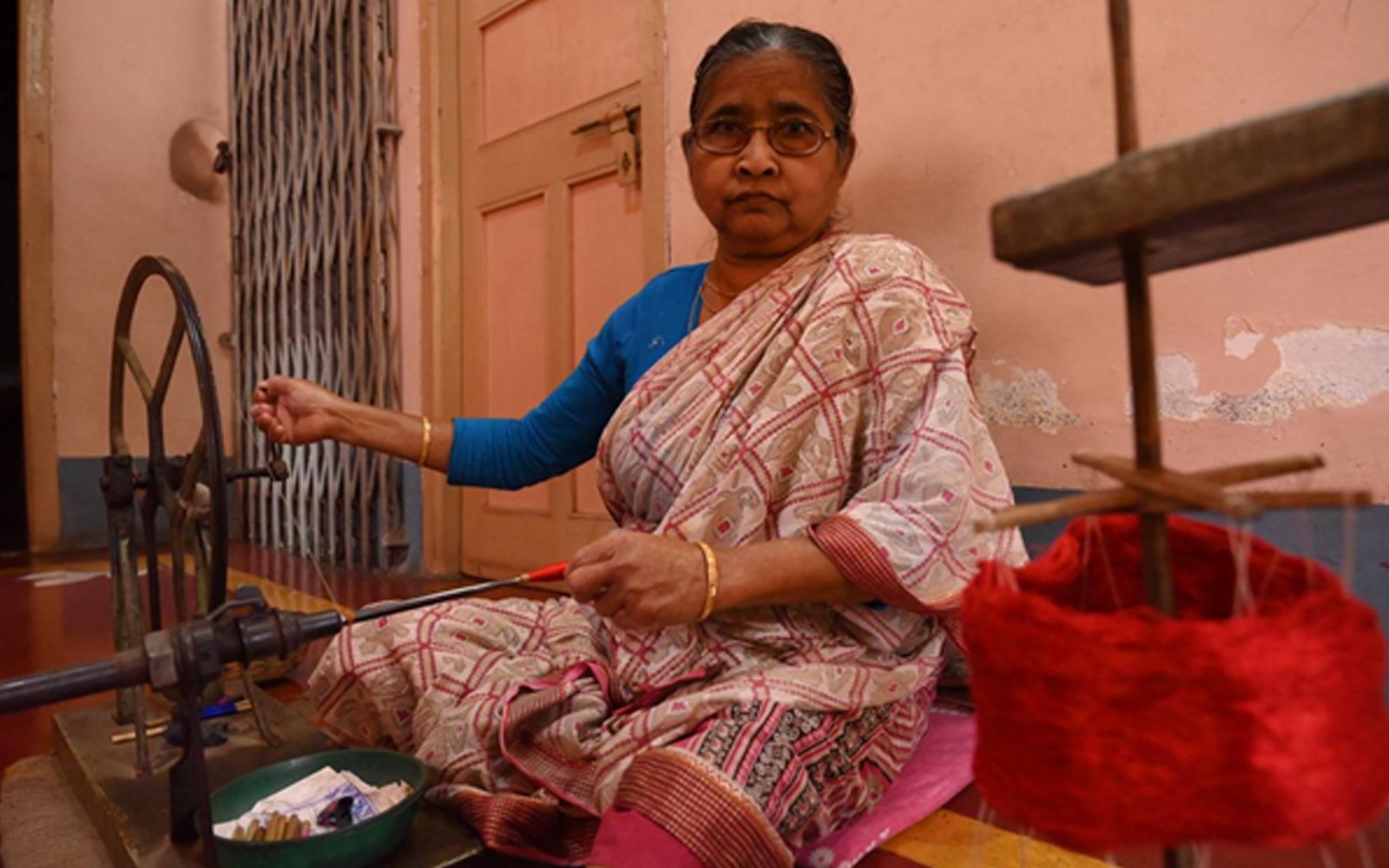
Reeling in Bishnupur, West Bengal (Photo:ACCESS)
Every year on August 7, India pauses to honour a craft that has clothed, employed, and defined the country for centuries. This year’s National Handloom Day was observed on August 7, marking its edition, themed “Hands that Weave the Nation.” The day traces its roots back over a century — to a meeting at Calcutta Town Hall on August 7, 1905, that formally launched the Swadeshi Movement, encouraging the use of indigenous products over foreign goods. More than a hundred and twenty years on, the handloom has lost none of its symbolism. It remains a thread connecting India’s freedom movement to its present-day pursuit of sustainable, self-reliant livelihoods.
From the resist-dyed brilliance of Ikats to the gold-threaded opulence of Banarasi brocades and the temple-border grandeur of Kanjeevarams, Indian handlooms are not just textiles, they are artisanal masterclasses, each pattern carrying the memory of a region, a community, a lineage of skill passed hand to hand. Behind every metre of woven cloth is a story of empowerment, patience, and self-sufficiency that predates independence and continues to sustain millions of families today.
The State of Support: Where Government Steps In
The scale of India’s handloom sector is staggering, and so is its human footprint. The sector recognises 35.22 lakh weavers and allied workers, over 72% of whom are women — making it one of the largest sources of women-led rural employment in the country. Recognising this, the Ministry of Textiles has steadily built out an ecosystem of support around the handloom weaver.
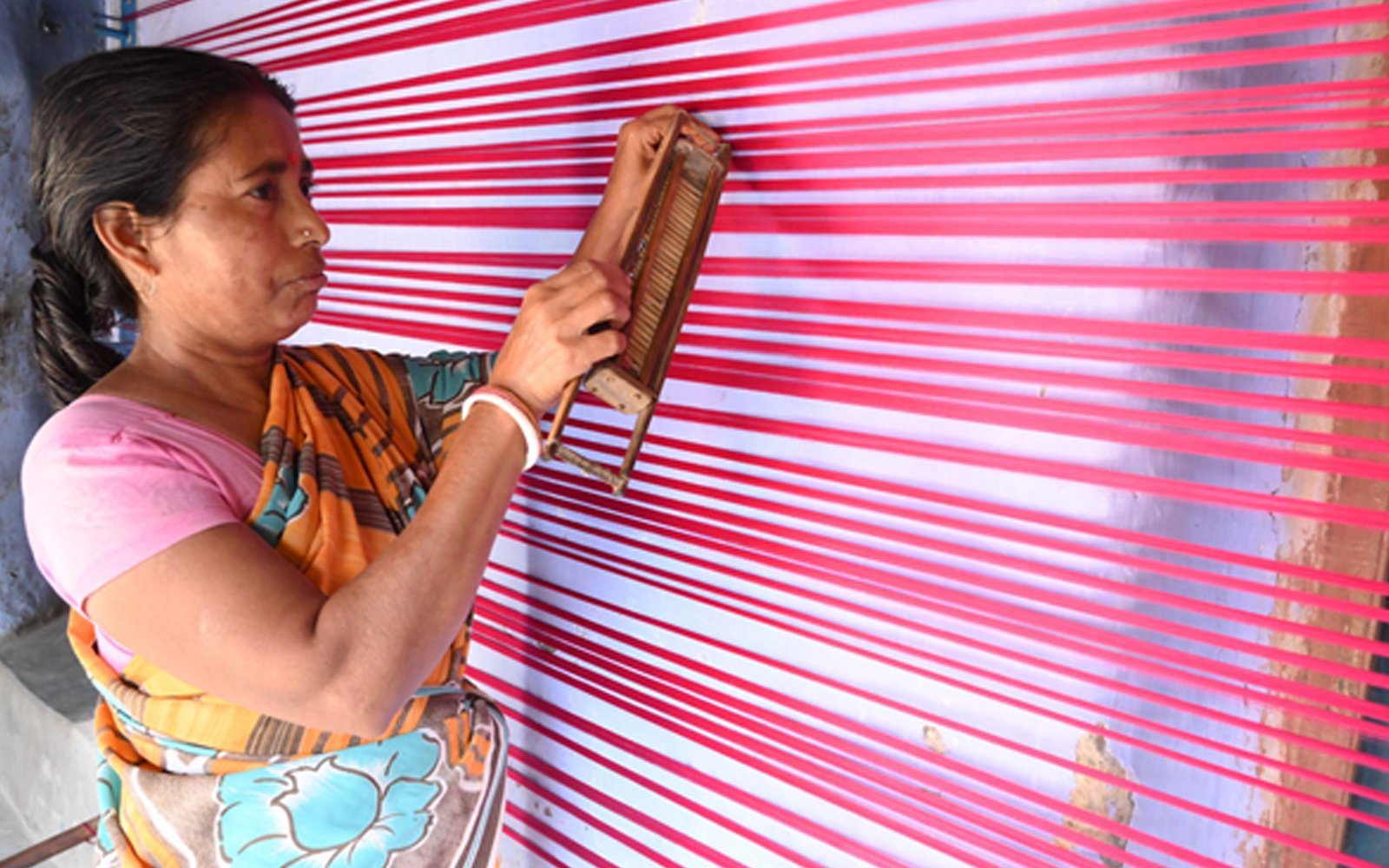
Warp setting in Bishnupur, West Bengal (Photo:ACCESS)
At the heart of this is the National Handloom Development Programme, which takes a need-based approach to the integrated development of handloom weavers, working through state handloom corporations, cooperative societies, federations, Handloom Producer Companies, and partner banks. Market access, long the weaker link in the handloom value chain, has also seen dedicated attention. Between 2021-22 and mid-2026-27, the government facilitated over 960 marketing events, including national and state-level expos and craft melas, alongside direct sales platforms, export promotion support, and Urban Haats. The sector’s finest are recognised each year through the Sant Kabir Handloom Award and the National Handloom Award, with the most recent cycle honouring 24 weavers, including six women and a Divyang awardee.
Digitisation has entered the picture too. The e-Pehchan Portal, launched in January 2025, issues digital identity cards to registered weavers and allied workers, easing their access to welfare schemes, and by July 2026 had approved roughly 84,000 additional workers. At the cluster level, programmes like the Small Cluster Development Programme continue to strengthen looms, worksheds, lighting, and design inputs for smaller handloom communities.
These interventions matter. But policy alone cannot rebuild a market for handwoven cloth in a world of fast fashion, that requires consumer connection, design relevance, and, crucially, organisations willing to work at the last mile, cluster by cluster, weaver by weaver. This is where ACCESS comes in.
ACCESS is building the Livelihoods from the Ground Up
ACCESS Development Services has spent two decades incubating innovations for sustainable livelihoods among India’s poor, working across the development value chain with civil society organisations, government departments, the corporate sector, and multilateral agencies. Handlooms sit naturally within this mandate, a sector where the right kind of support, delivered consistently, can transform not just incomes but the survival of entire craft traditions
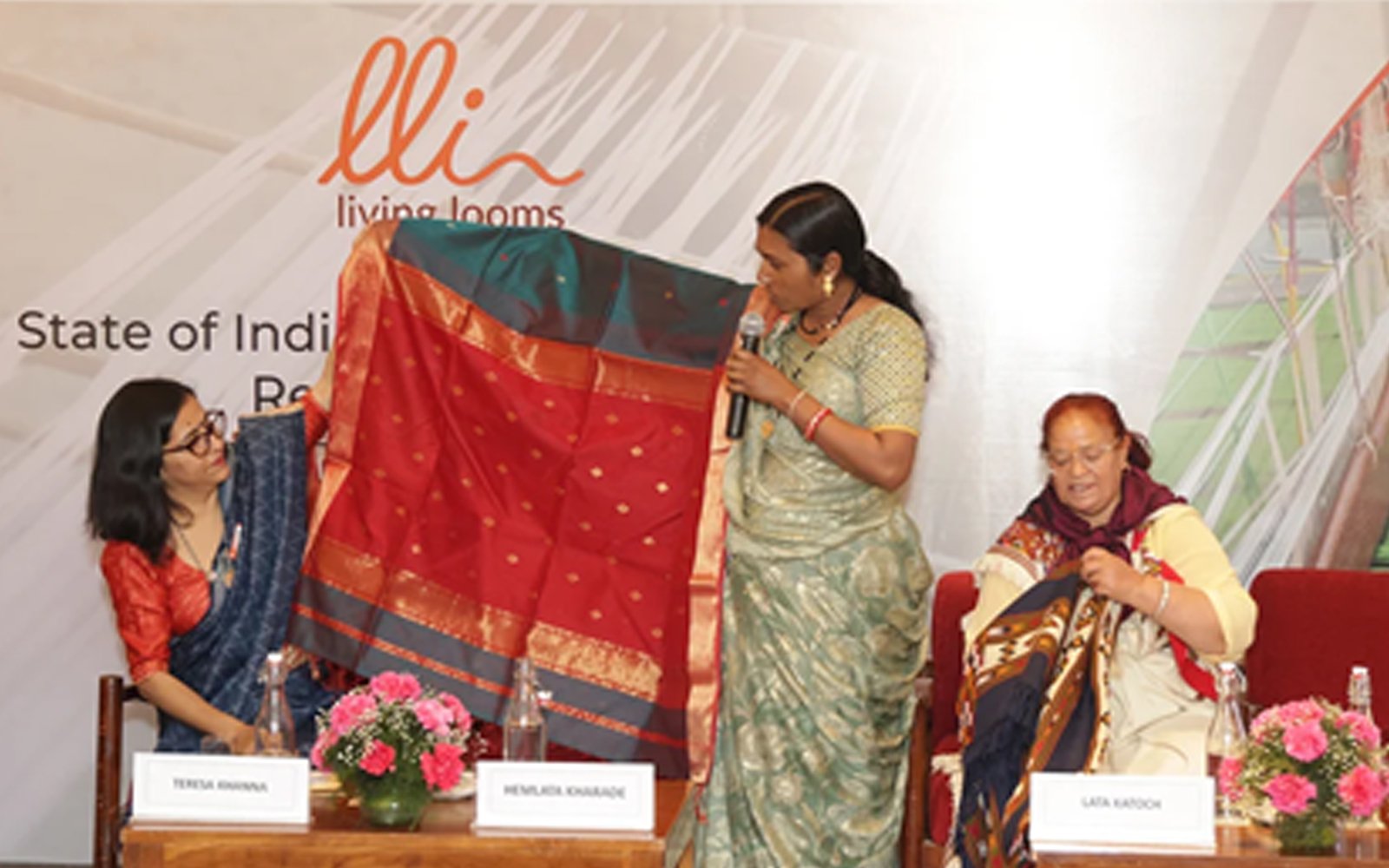
LLI State of India’s Handloom Sector Report 2025 (Photo:ACCESS)
That support takes shape through Living Looms of India (LLI), ACCESS’s dedicated handloom initiative. LLI revitalises weaving villages by giving artisans something they have historically lacked: direct, unmediated access to markets, cutting out layers of intermediaries and letting weavers capture more value from their own craft.
As part of its Long-Term Strategic Plan for the sector, LLI has committed to revitalising 20 handloom clusters across the country. The initiative is now in its third phase, and the focus has sharpened considerably, from simply strengthening weaver livelihoods to building an environmentally sustainable handloom sector for the long term. It’s a natural evolution. Handlooms are already inherently low-impact, they run on human skill rather than grid power, rely on natural fibres, and fit neatly within circular economy thinking. Yet the sector faces real environmental headwinds too: low consumer awareness of these inherent sustainability credentials, limited use of sustainable raw materials, and a continued reliance on synthetic dyes that pollute water and soil.
Phase three of LLI takes these challenges head-on, working to:
- Integrate sustainable practices across every stage of production
- Promote natural dyes while reducing water and energy consumption
- Strengthen waste management to prevent environmental pollution at the cluster level
The approach is deliberately two-pronged, direct, hands-on support for individual weavers, paired with ecosystem-wide strengthening across clusters, so that the gains are not just immediate but durable.
What Does “Meeting the Marketplace” Actually Look Like?
Good policy and patient groundwork build the supply side. But handlooms also need demand, spaces where urban consumers can encounter the weaver’s craft directly and choose to bring it home. That’s the gap LLI works to close, curating showcases where “handcrafted stories meet timeless design,” bringing artisanal textiles, pottery, home décor, and apparel together under one roof for buyers to discover.
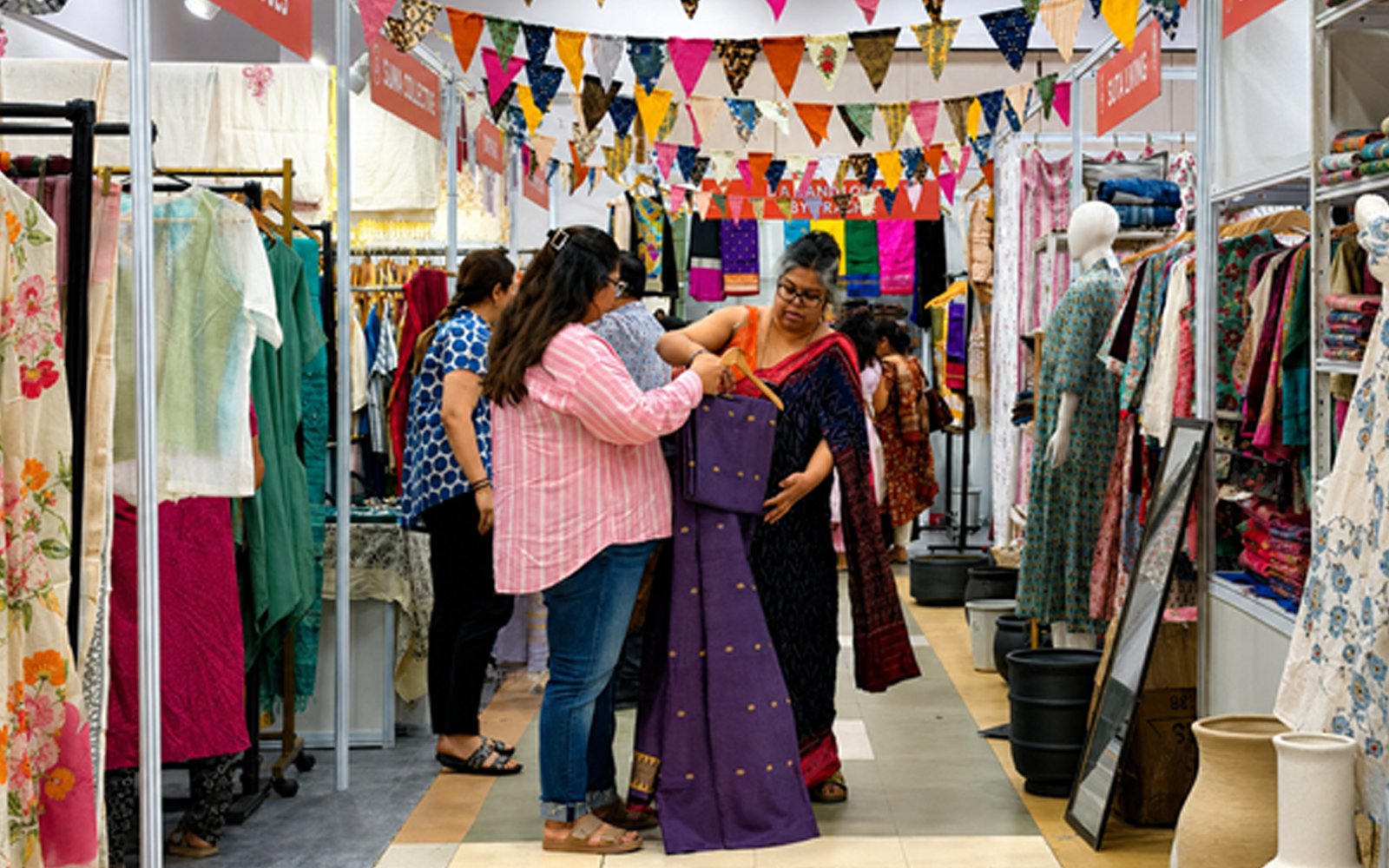
Monsoon Mélange 2026 – AGA KHAN HALL (Photo:Alisha, ACCESS)
Over time, these market linkages have done more than generate a day’s worth of sales. Many weavers and artisans who once relied entirely on middlemen have gone on to build a direct relationship with their customers, several have even started their own social media pages, sharing their process, their stories, and their products with audiences far beyond what a single event could reach. It’s a quiet but powerful shift: artisans no longer waiting to be discovered, but actively owning how their craft is seen and sold. That’s the real, lasting outcome LLI is working toward, not a single moment of visibility, but a sustainable, self-driven market presence for the artisans themselves.
The Thread That Connects
National Handloom Day asks India to pause and remember its weavers for a day. But a thread, once picked up, is meant to keep moving, and that’s exactly what Living Looms of India is built to do. Every cluster strengthened, every adopted, every artisan who finds a buyer in market is a small act of continuity, making sure this craft doesn’t just survive but thrives for the generations still to come.
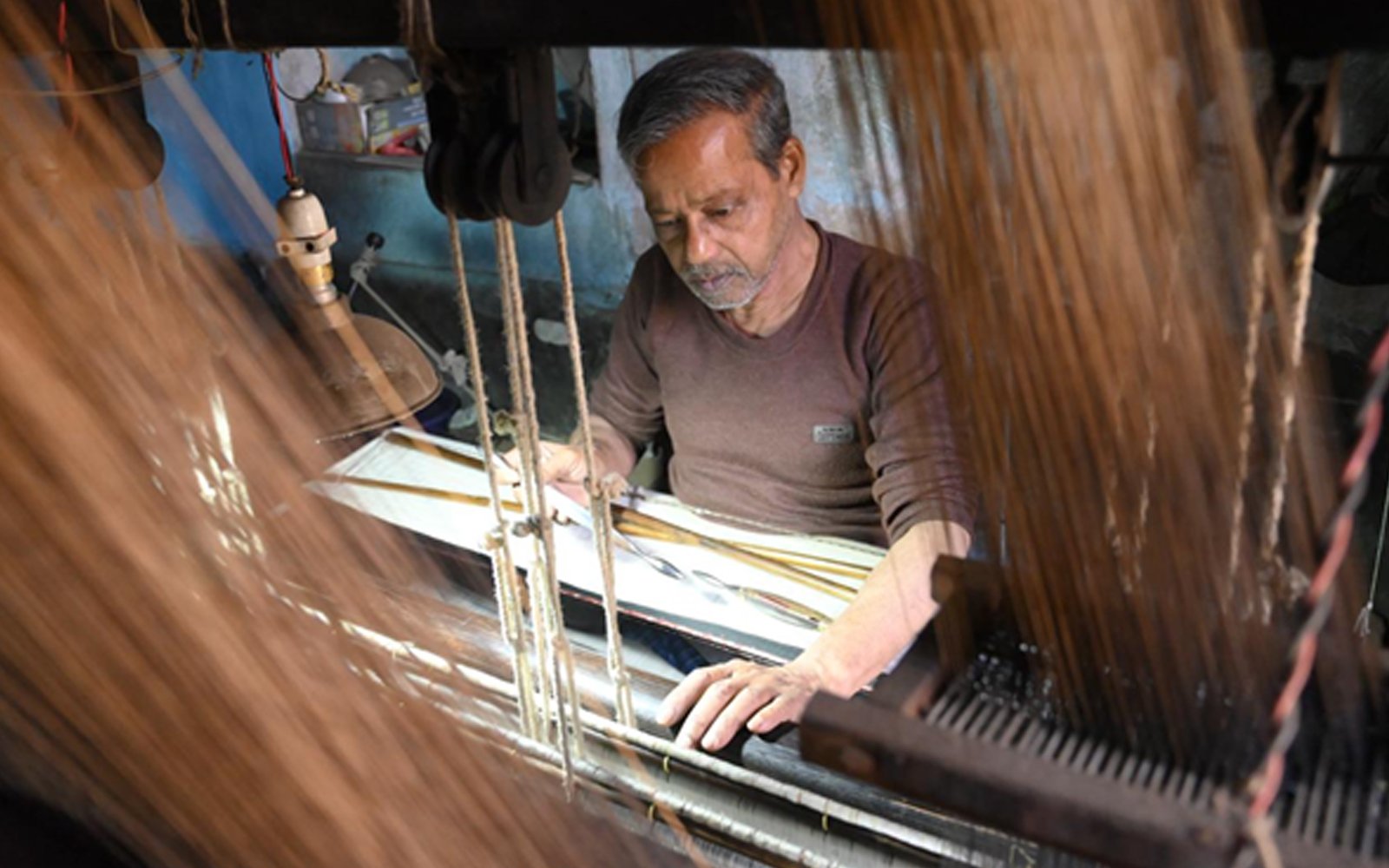
Weaving in Kota (Photo:ACCESS)
From the Swadeshi Movement of 1905 to the handwoven stories being told today, India’s handlooms have always carried the same quiet power: the belief that dignity, self-reliance, and beauty can be woven by hand, one thread at a time. That belief is far from finished. It’s being passed on, loom by loom, weaver by weaver, and LLI is proud to help carry it forward.