
On World Day Against Child Labour, the story of KAWACH and the women who turned a wage into protection
Author : By Nishtha Paliwal, AVP – Communications
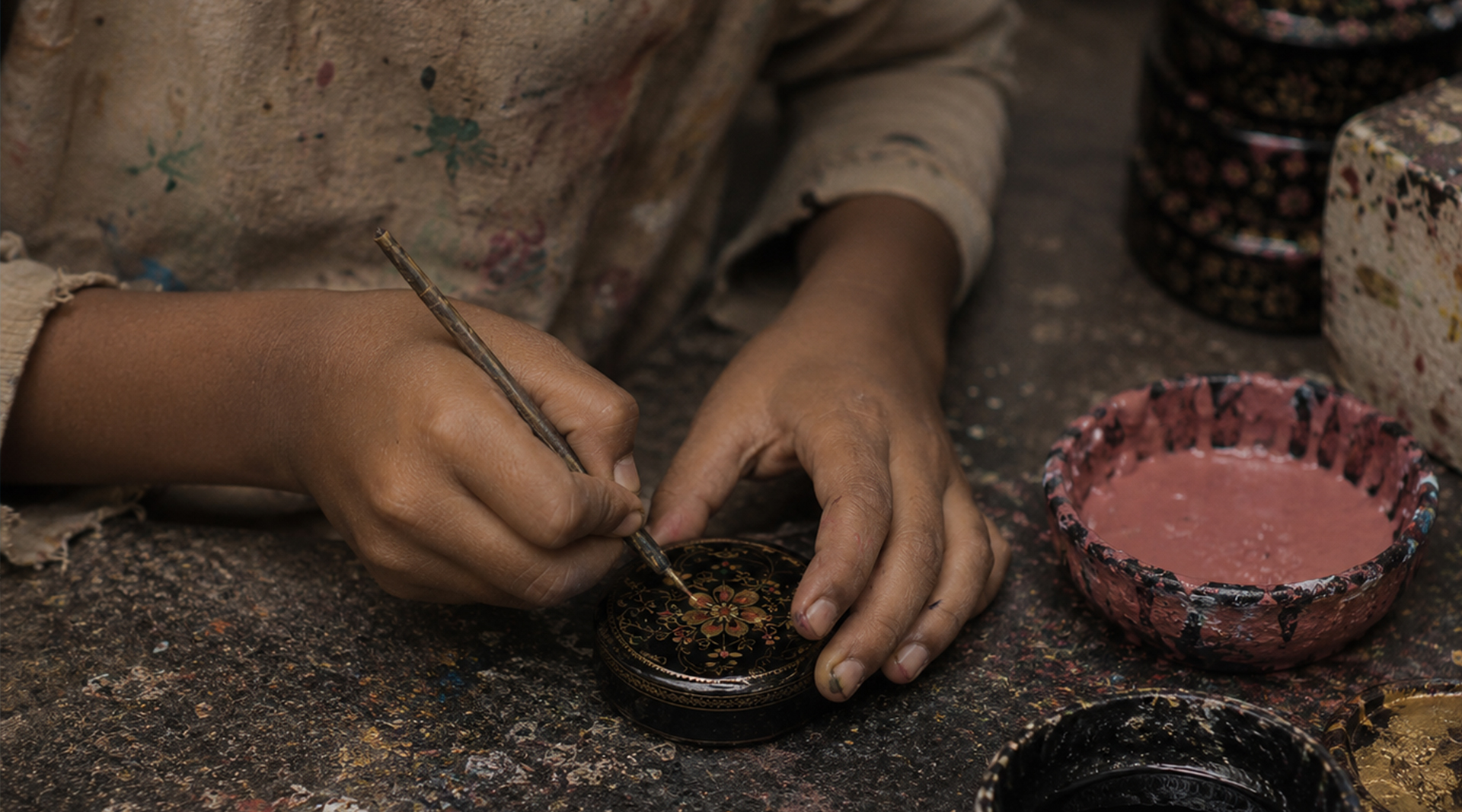
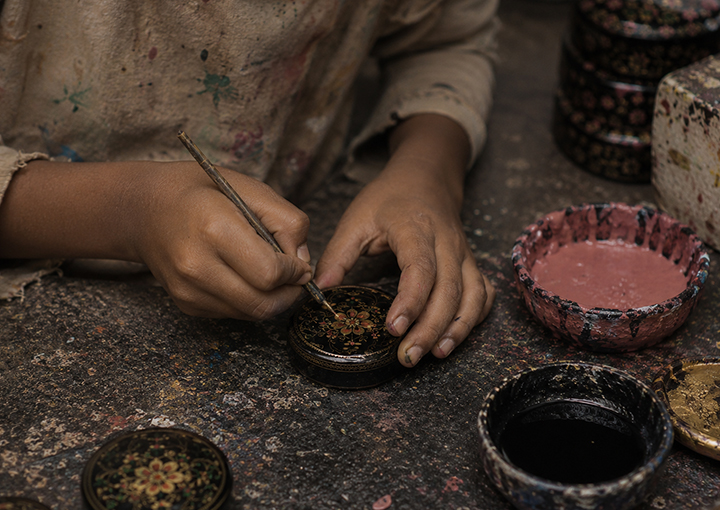
Tiny hands working on Jaipur lacquer art (Photo: AI generated)
Across India, child labour remains a persistent reality. According to the 2011 Census, 4.35 million children aged 5–14 years were classified as main workers in India. However, experts believe the actual number of working children may be significantly higher, particularly in informal and home-based sectors that often go unrecorded. (Source: PIB , 2021)
Behind these numbers are households making difficult choices. When income is uncertain and opportunities are limited, education becomes harder to sustain. A missed school day becomes a missed year. Childhood is exchanged for contribution to family survival
The British Asian Trust had already been working to build child-labour-free communities through its child protection programme KAWACH (in Hindi, kawach means armour, or shield), and it was after recognising this shared concern that ACCESS Development Services joined the effort to tackle the problem at its root in 2019 on the understanding that protecting children from labour meant addressing the economic and social vulnerabilities that push them into work in the first place.
Instead of focusing only on removing children from work, it sought to reduce the conditions that make child labour necessary. The project aimed to strengthen the earning capacity, skills, and economic agency of women in textile-producing communities around Jaipur, creating a more stable foundation for their families and greater opportunities for their children.
The Challenge at the Heart of KAWACH
India has established a robust legal framework to address child labour. Under the Child and Adolescent Labour (Prohibition and Regulation) Act, 1986 (amended in 2016), employment of children below the age of 14 is prohibited in all occupations and processes, while adolescents aged 14–18 are prohibited from working in hazardous occupations and processes. However, challenges remain in implementation, particularly within informal sectors where child labour is often difficult to identify and monitor. (Source: PIB, 2023)
Child labour remains concentrated in rural areas and among economically vulnerable households. States such as Uttar Pradesh, Bihar, Rajasthan, Madhya Pradesh, and Maharashtra account for a significant proportion of working children. Poverty, limited educational access, social norms, and inadequate livelihood opportunities continue to drive children into work. Girls often face an additional burden. Many are engaged in unpaid domestic labour and caregiving responsibilities that keep them away from classrooms while remaining largely invisible in official statistics. (Source: CRY (Child Rights and You), Child Labour in India: A Position Paper (based on Census 2011 analysis & Census of India 2011, Child Workers Data)
Addressing child labour therefore requires more than legal action. It requires addressing the economic pressures that families face every day.
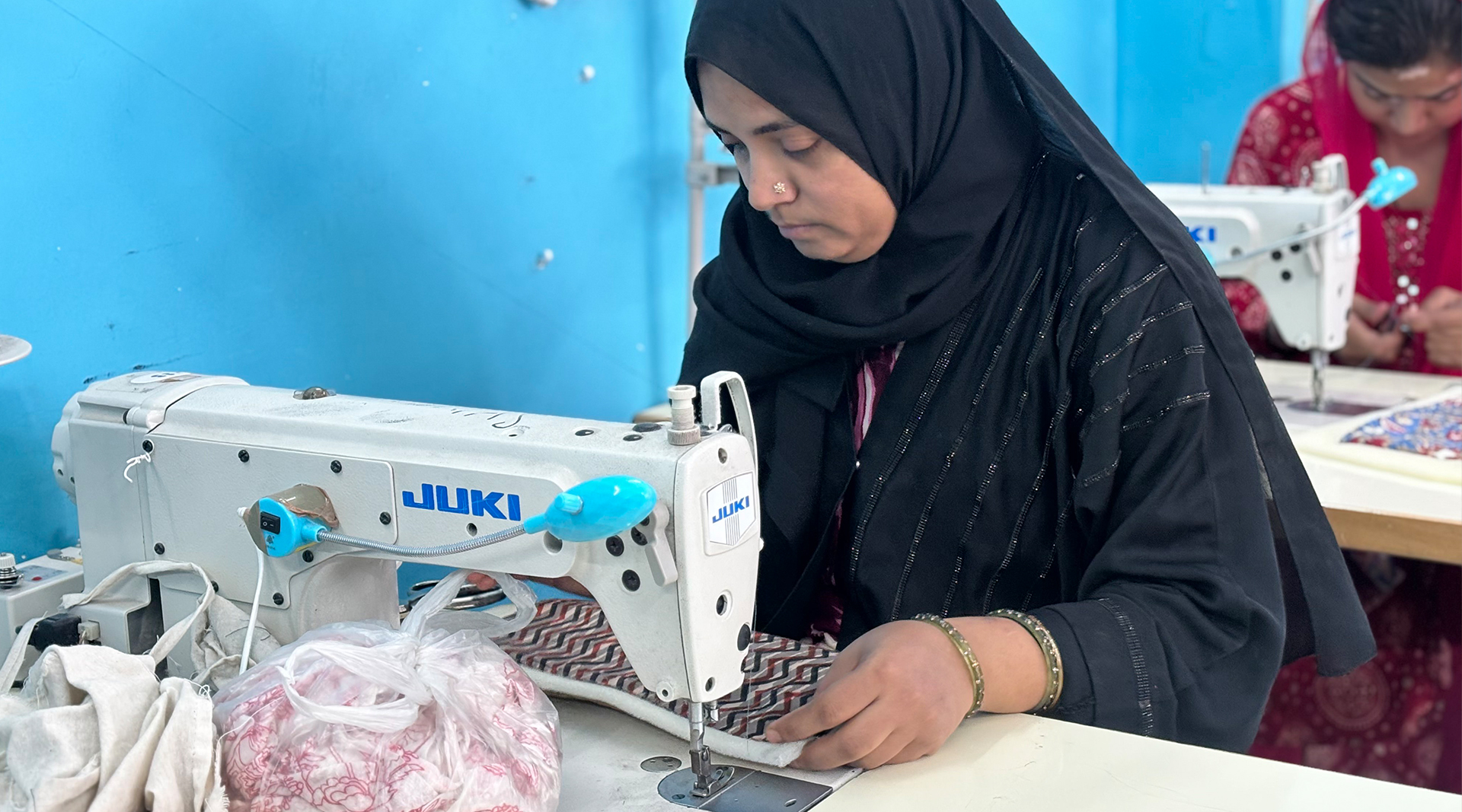
One of the women artisans working at the KAWACH production centre in Jaipur.
Rajasthan presented both a challenge and an opportunity. The state remains among those most affected by child labour, while also being home to one of India’s most vibrant textile and garment traditions. Across Jaipur and surrounding areas, generations of women have possessed skills in stitching, embroidery, cutting, finishing, and garment production. Yet much of this work remained informal, underpaid, and unrecognised.
When households migrate to Jaipur in search of work, every member of the family is drawn into earning. Jaipur’s textile and lacquer industries depend on fine, intricate handwork, and small fingers are prized for such delicate tasks. Children are also cheaper to employ, so employers in the unorganised sector actively seek them out. With parents under pressure to increase household income, children are often sent to work alongside them. KAWACH recognised this cycle and set out to break it by strengthening women’s livelihoods.
Rather than introducing entirely new livelihoods, the project focused on strengthening existing capabilities and connecting women to sustainable income opportunities.
Today, KAWACH brings together more than 800 women across 65 Self-Help Groups. Around 40 women work regularly through organised production centres, while more than 100 contribute from their homes. When women earn consistently, they gain greater influence over household decisions. They invest in education, health, nutrition, and long-term aspirations for their children. Economic participation strengthens confidence, decision-making power, and social standing within families and communities.
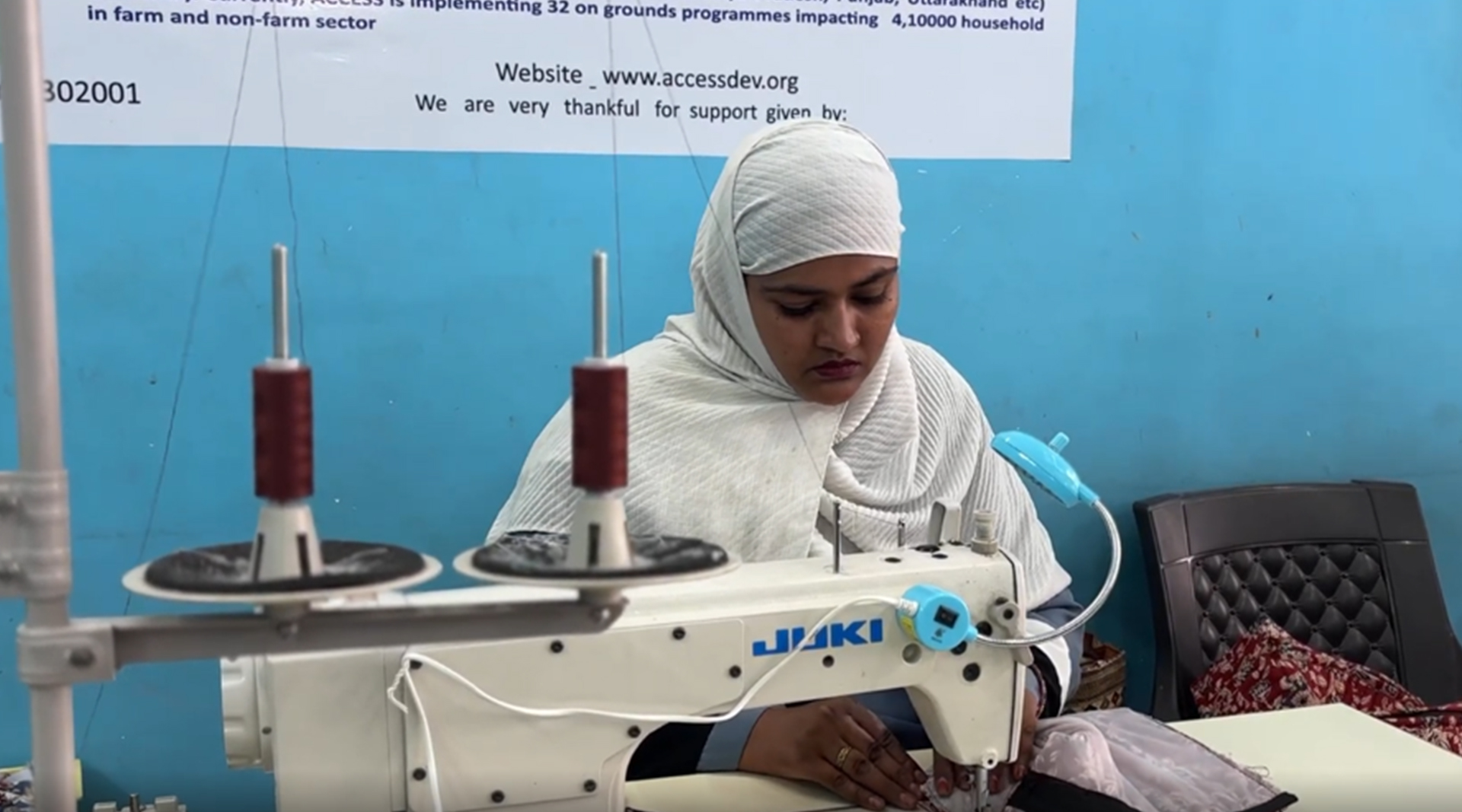
Yasmin working on bag production for a customer order at the KAWACH production centre in Jaipur (Photo: Akshita, ACCESS)
“Before joining the centre, it was difficult to support my children’s education. Through KAWACH, I gained skills, work, and confidence. Today, all three of my children are studying, and I feel proud that I can contribute to their future.”
— Yasmeen, Artisan, KAWACH
From Skilled Workers to Business Owners
KAWACH was never designed as a short-term livelihood programme. At its centre is the Crafts Women Producer Company, an enterprise that enables women to transform skills into sustainable livelihoods through access to training, production infrastructure, and markets.
Investments in stitching machines, cutting and finishing units, and skill-development programmes have strengthened women’s capabilities and earning potential. Many who joined as trainees now support production and mentor others.
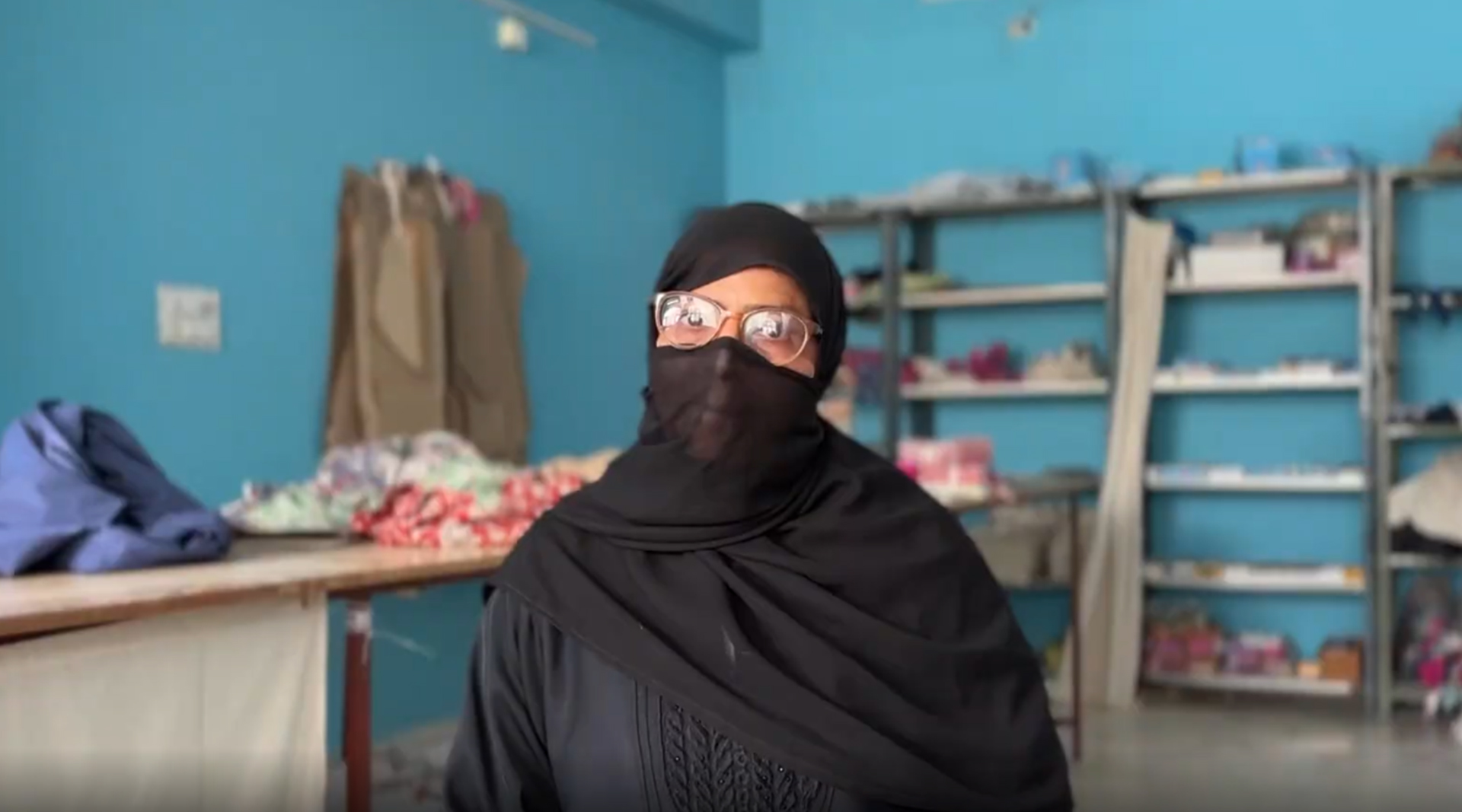
Shehzadi, one of the Kawach artisans (Photo: Akshita, ACCESS)
“Before joining KAWACH, we earned only ₹3,000–4,000 a month. Today, with the skills and opportunities we have gained, our income has increased, and we are able to pay our children’s school fees and support their education.“, Shehzadi, KAWACH artisan
The impact is reflected in the company’s growth- from approximately ₹21 lakh in annual revenue in 2021 to nearly ₹80 lakh by 2026. Beyond business success, this growth represents greater household stability, reduced economic vulnerability, and increased investment in children’s education and well-being.
Why This Matters for Child Labour
Child labour is often driven by economic insecurity. When families struggle to meet basic needs, children are more likely to contribute to household income.
KAWACH addresses this root cause by strengthening women’s livelihoods. Through skills, income opportunities, and market access, the project helps families reduce economic vulnerability and invest in their children’s education. The approach is guided by three principles: Ethical. Engage. Empower. Ethical production practices, active participation of women as partners, and a focus on long-term ownership and self-reliance.
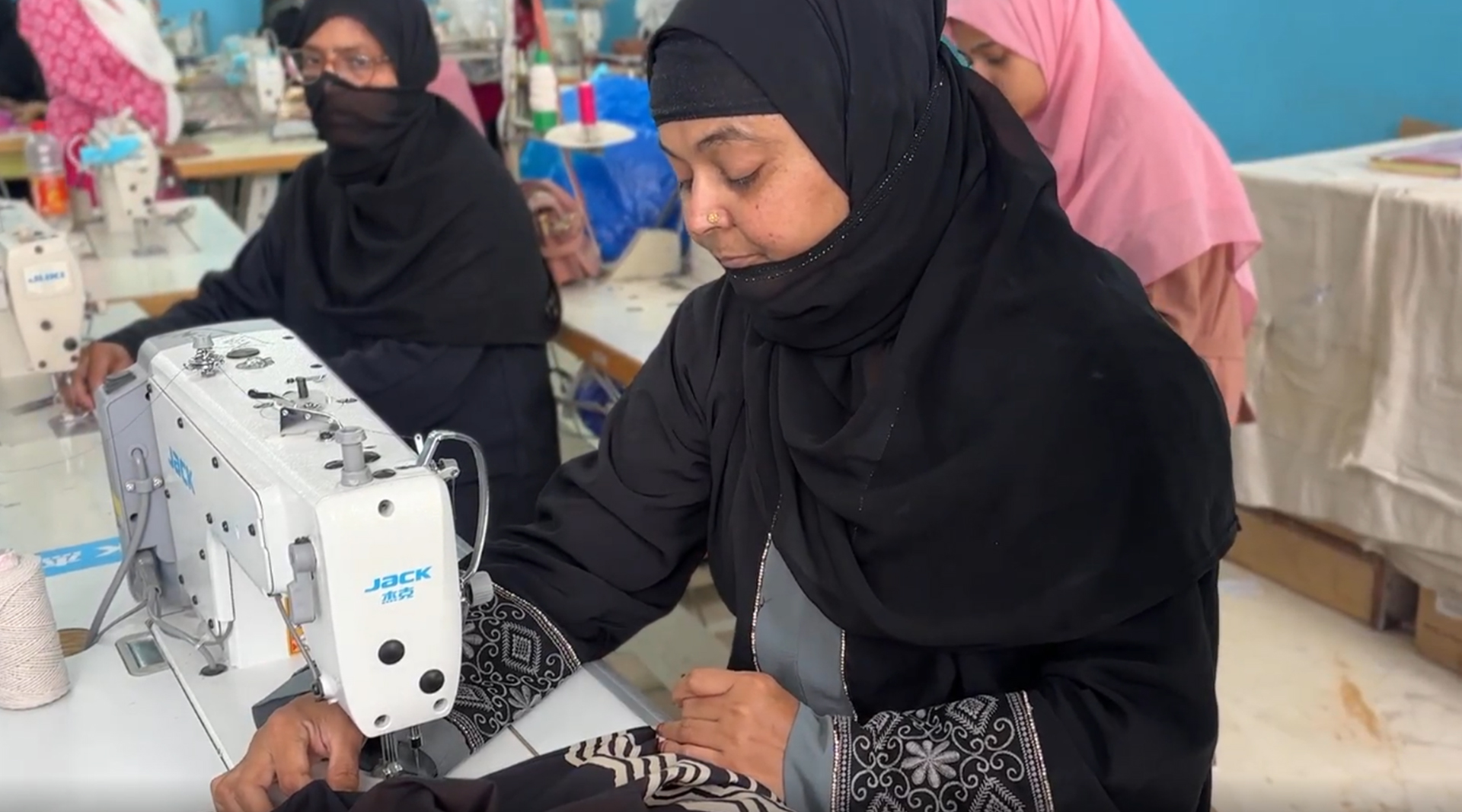
Nasim working at the KAWACH production centre in Jaipur (Photo: Akshita, ACCESS)
For Nasim, the impact of KAWACH has extended far beyond income. After joining the initiative, she gained stitching skills, confidence, and the ability to contribute to her household’s financial stability. Her earnings have supported her family’s expenses and helped ensure that both her children continue their education. Inspired by the changes in her own life, she also began encouraging other families in her community to prioritise education for their children.
“As I saw positive changes in my own life, I encouraged other families to keep their children in school. Today, children who had dropped out are going back to school.”, Nasim, KAWACH artisan
What began as a struggle for survival is slowly becoming something more hopeful. Incomes that let families not merely get by, but aspire- to plan ahead and keep their children in school.
Looking Ahead
As KAWACH approaches the conclusion of its project cycle, the work itself continues.
The Crafts Women Producer Company is evolving into a self-sustaining enterprise offering sourcing, sampling, embroidery, garment production, and value-added services to fashion and textile brands seeking responsible manufacturing partners. As demand grows for ethical and transparent supply chains, women artisans are increasingly positioned not as beneficiaries of development programmes but as entrepreneurs, producers, and business leaders.
The focus going forward is clear- strengthen artisan skills, deepen leadership within the enterprise, expand market linkages, and build a resilient customer base capable of supporting long-term growth. The objective remains the same as it was in 2019- create economic opportunities strong enough to protect childhoods.
On This World Day Against Child Labour
Child labour is often discussed through statistics, but lasting change is built through people.
Every woman who joined a Self-Help Group, learned a new skill, secured a fair income, strengthened her confidence, and chose education for her children over economic necessity has contributed to that change.
The story of KAWACH is ultimately not about a project. It is about women who transformed skills into livelihoods, livelihoods into agency, and agency into opportunity for the next generation. That is the real kawach– a shield built through dignity, resilience, and economic empowerment.
And for hundreds of families across Rajasthan, it continues to protect what matters most- a child’s right to learn, grow, and dream.
KAWACH is an initiative of The British Asian Trust, implemented in partnership with ACCESS Development Services, working to reduce child labour by strengthening the skills, livelihoods, and economic opportunities of women in the textile sector around Jaipur. To learn more about the Crafts Women Producer Company and partnership opportunities, contact: suvendu@accessdev.org.