
Author : By Nishtha Paliwal, AVP- Communications, ACCESS Development Services
Each year, Earth Day reminds us of the fragile balance between human activity and natural resources. This year’s conversations are particularly urgent for India, where water and soil two foundational pillars of agriculture are under severe stress.
India remains the world’s largest user of groundwater, extracting over 245 billion cubic metres annually, with agriculture accounting for nearly 85–90% of this use (Public Accounts Committee’s 41st report). Even as recharge efforts improve, extraction continues to exceed sustainable limits in many regions, especially in states like Rajasthan, Punjab, and Haryana. At the same time, nearly 30% of India’s land is degraded due to unsustainable agricultural practices, according to the Indian Council of Agricultural Research.
This imbalance is further amplified by the fact that India supports nearly 18% of the global population with just about 4% of the world’s freshwater resources (World Bank, FAO). As a result, water scarcity and soil degradation are no longer distant environmental concerns but everyday realities shaping farmers’ livelihoods.
However, the challenge extends beyond resource scarcity to a lack of awareness, many farmers still lack clear visibility into water availability, usage, and long-term impacts on soil and livelihood. Bridging this gap between experience and understanding is critical to enabling sustainable agricultural practices.
Rajasthan: Where Scarcity Shapes Everyday Life
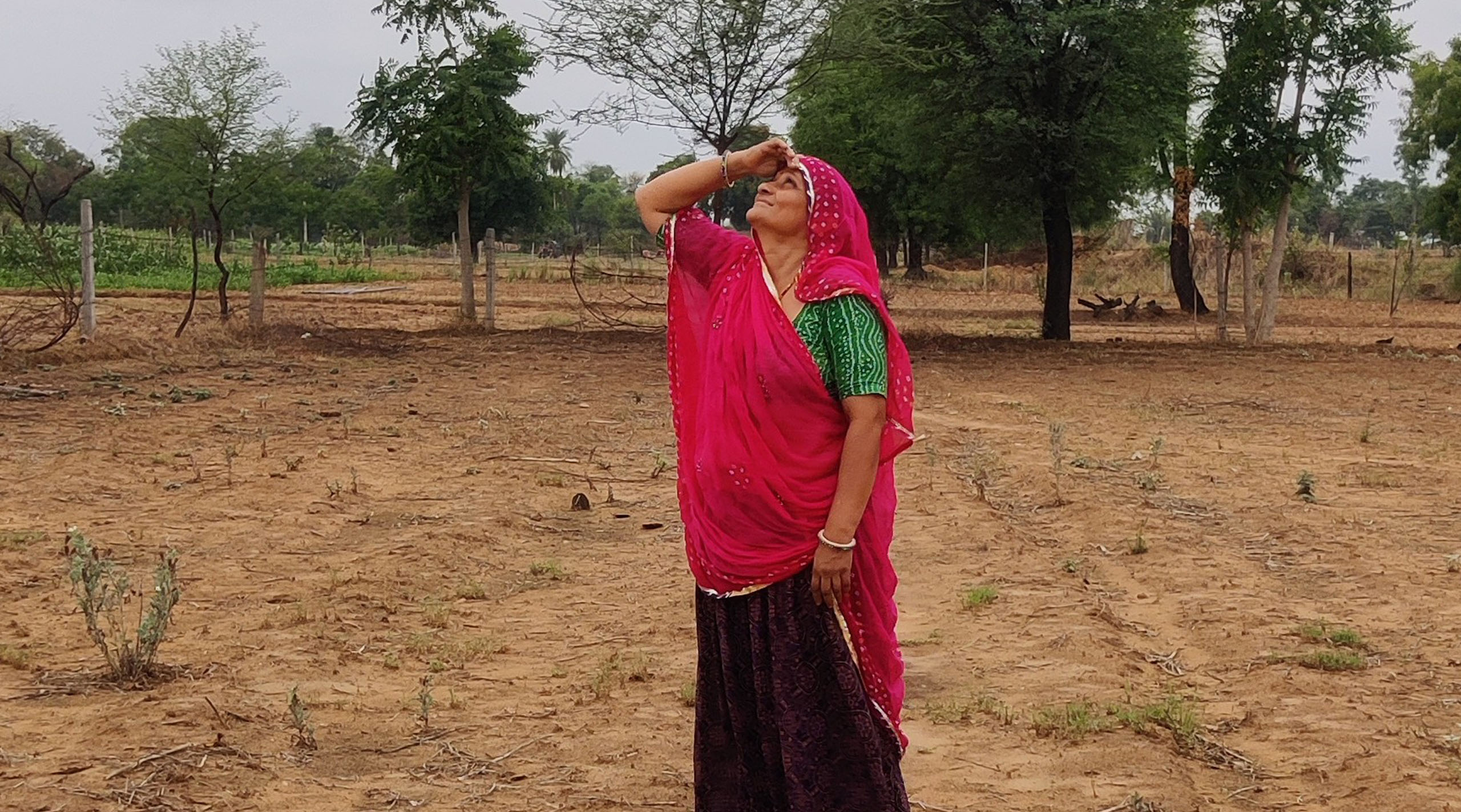
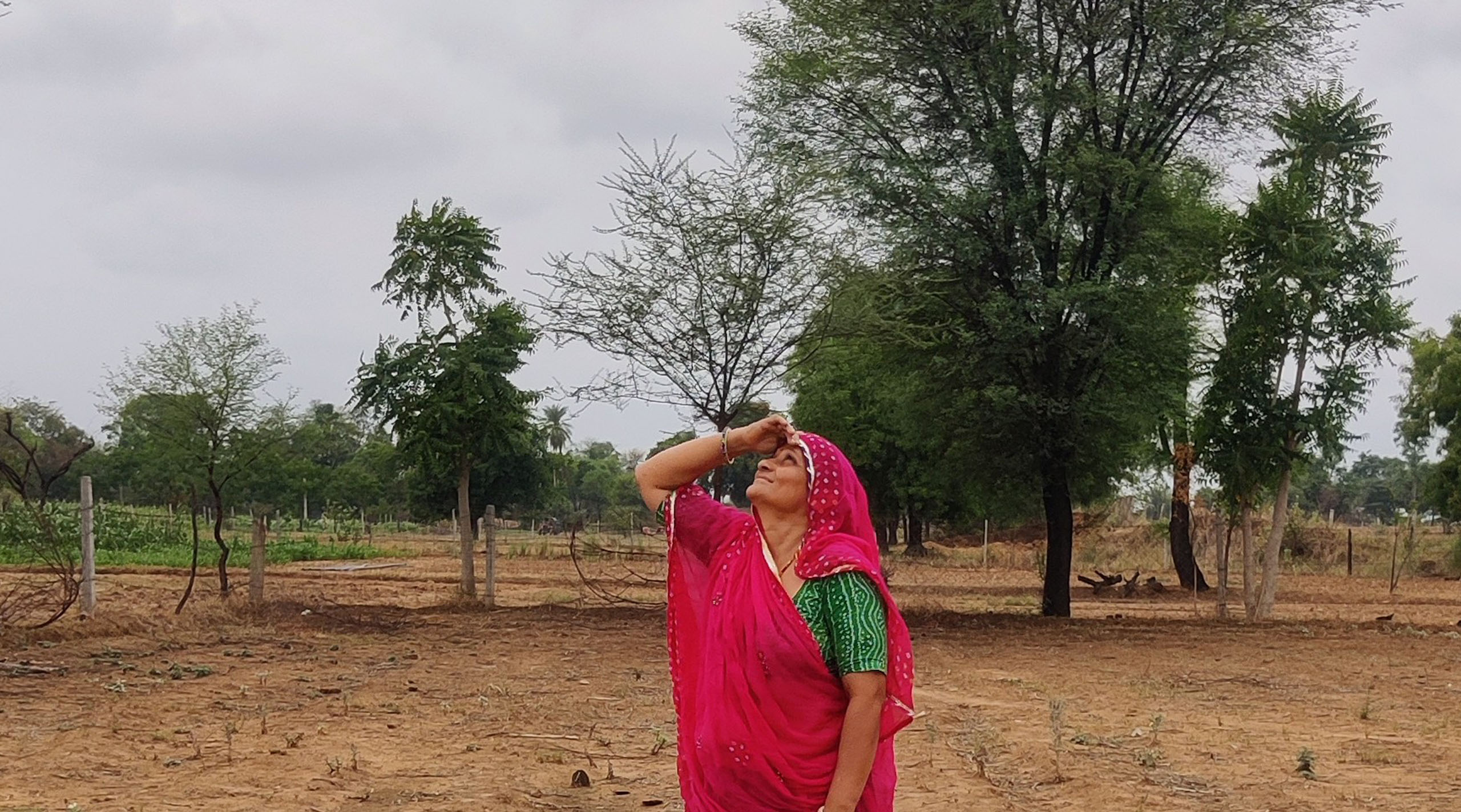
A farmer looks up at the sky, hoping for rain to arrive, Jaipur district, Rajasthan (Photo: ACCESS)
Rajasthan, characterized by low rainfall, high evaporation, and increasing dependence on groundwater, several districts in 10 blocks of Jaipur are now classified as “over exploited”, as per Central Ground Water Board (CGWB) report. In these regions, groundwater extraction far exceeds recharge, pushing farming systems to the brink.
For farmers, this translates into reduced yields, limited crop choices, and, in many cases, migration in search of alternative livelihoods. Yet, despite living through water scarcity daily, many lack the tools to quantify or manage it effectively.
Reimagining Water
In response to this challenge, ACCESS Development Services, under its Water User’s Group initiative in partnership with Hindustan Unilever Foundation, introduced a community-driven programme that focuses not just on resources, but on behaviour. The initiative has reached over 63,000 households till March 31st 2026 across nearly 450 villages in the last year, working closely with farming communities to build awareness, strengthen water governance, and promote sustainable agricultural practices in situ.
At the centre of this initiative is the Water Mobilization exercise, a participatory approach that transforms how farmers understand water. Instead of abstract lectures, farmers collaboratively map their village water resources and calculate water availability and consumption. This process turns invisible concepts like groundwater depletion and water budgeting into tangible, relatable insights.
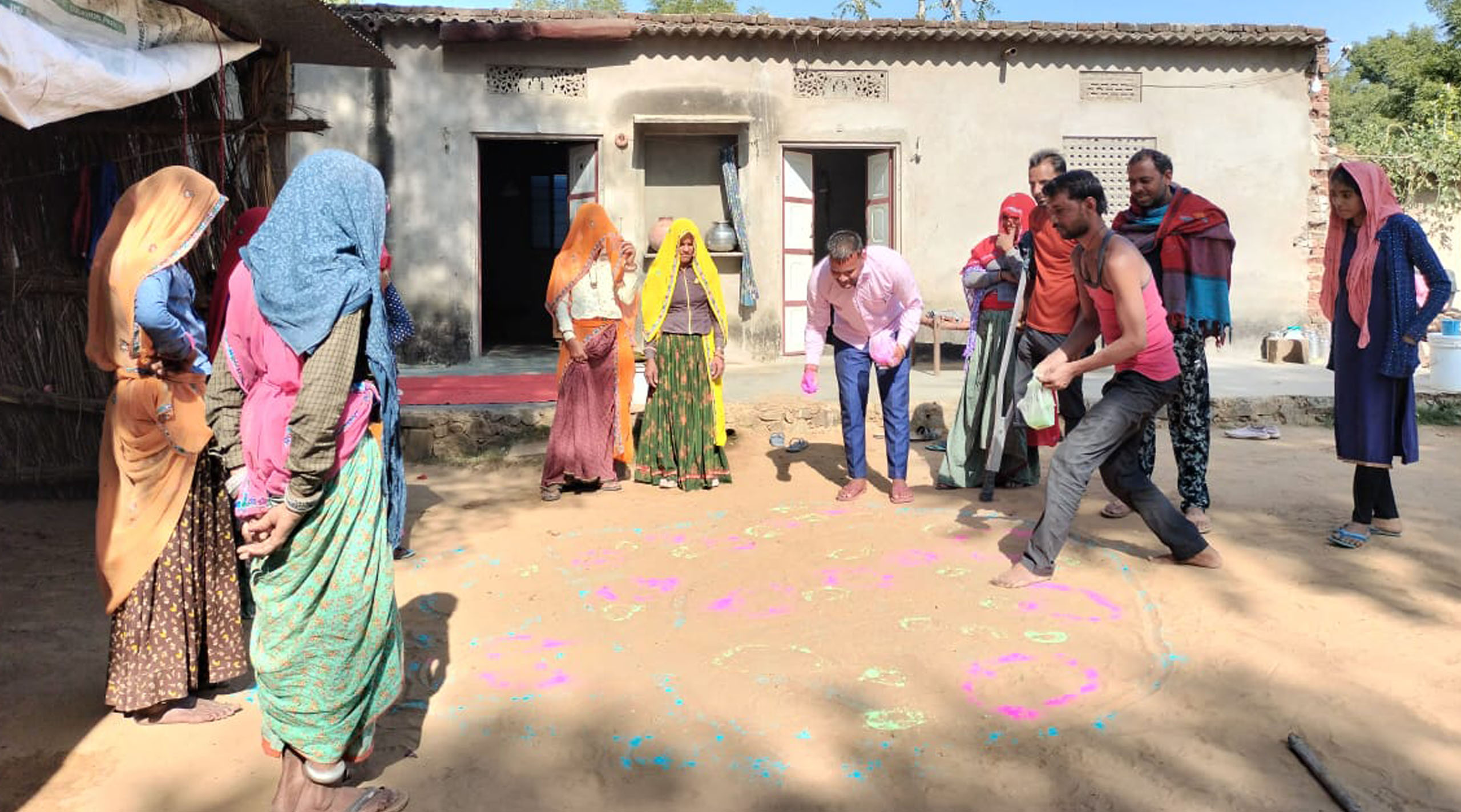
Farmers exercising Water Mobilization Exercise (Photo: ACCESS)
As farmers begin to see the numbers and patterns, a shift occurs. Water is no longer an individual asset but a shared community resource. Decisions around cropping, irrigation, and resource use become more informed, and importantly, more collective.
From Scarcity to Strength: Farmers Redefining Possibility
In Taskola village, Saroj Swami’s journey reflects the transformative potential of this approach. Once dependent on low-income, drought-resistant crops, her livelihood was constrained by limited water and low productivity. Through the programme, she adopted improved mustard cultivation practices using high-yielding seeds and bio-inputs.
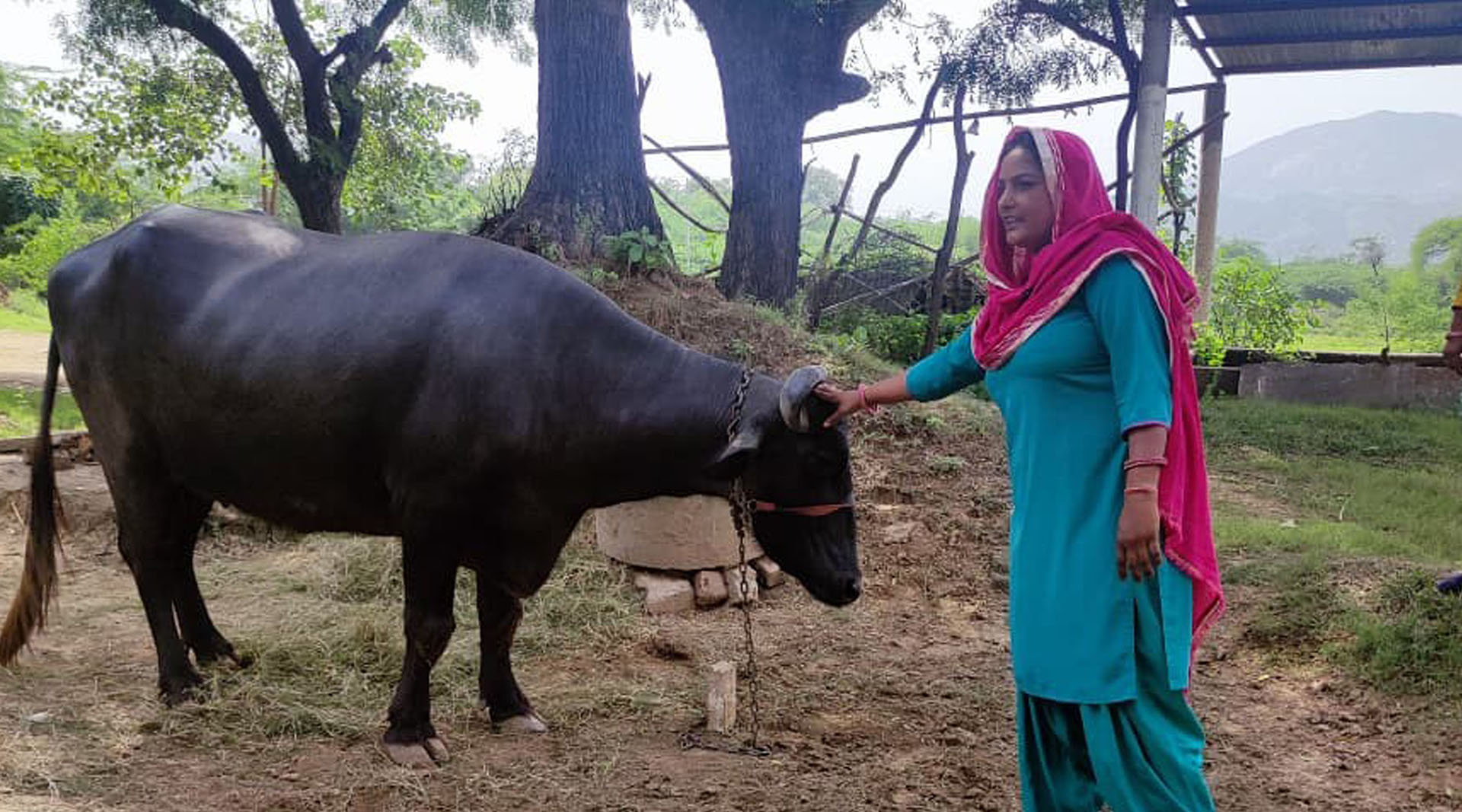
Saroj doing her household chores (Photo: ACCESS)
The results were immediate and significant. Her yields increased, her income nearly doubled, and her confidence grew alongside her financial stability. She diversified her income by purchasing livestock and began making independent decisions about her farm and household.
As Saroj shares, “Earlier, I hesitated to spend even a few hundred rupees. Now, I take my own decisions for my farm, my family, and myself.”
Her story is not just about increased income, but about reclaiming agency.
For Anju Devi from Gudda village, water scarcity had rendered her land barren for years. Despite owning agricultural land, she depended solely on her Anganwadi income, with farming seeming like an impossible option.
“Earlier, I used to think this land was of no use because of severe water scarcity. Now I know that with the right methods, even less water can give good crops. This land is my strength, not my weakness anymore”, she shares.
In Arjunpura village, Murarilal Sharma’s experience highlights the critical link between soil health and water sustainability. By adopting vermicomposting, he reduced his dependence on synthetic fertilizers while improving soil fertility and crop productivity.
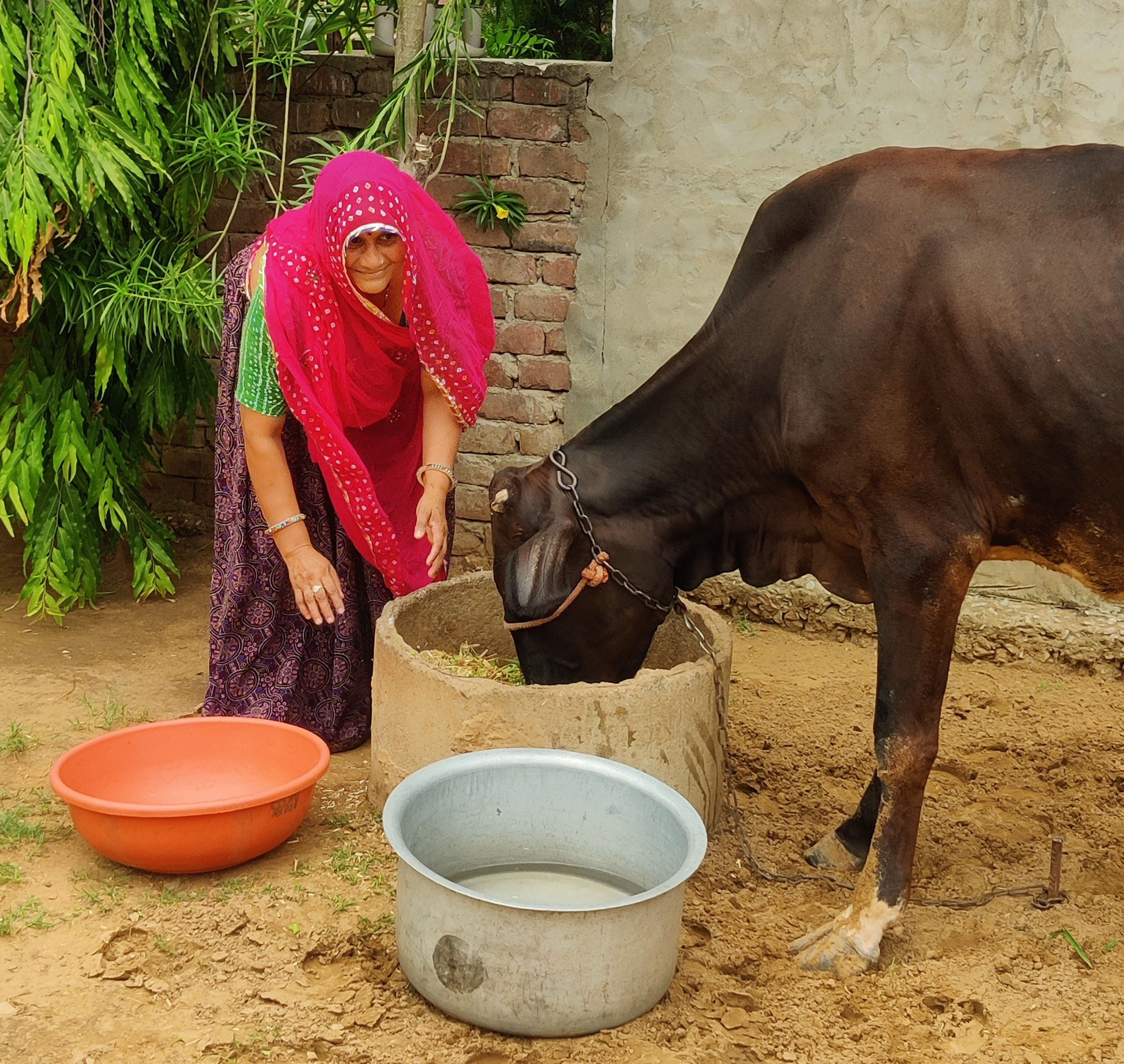
Saroj doing her household chores (Photo: ACCESS)
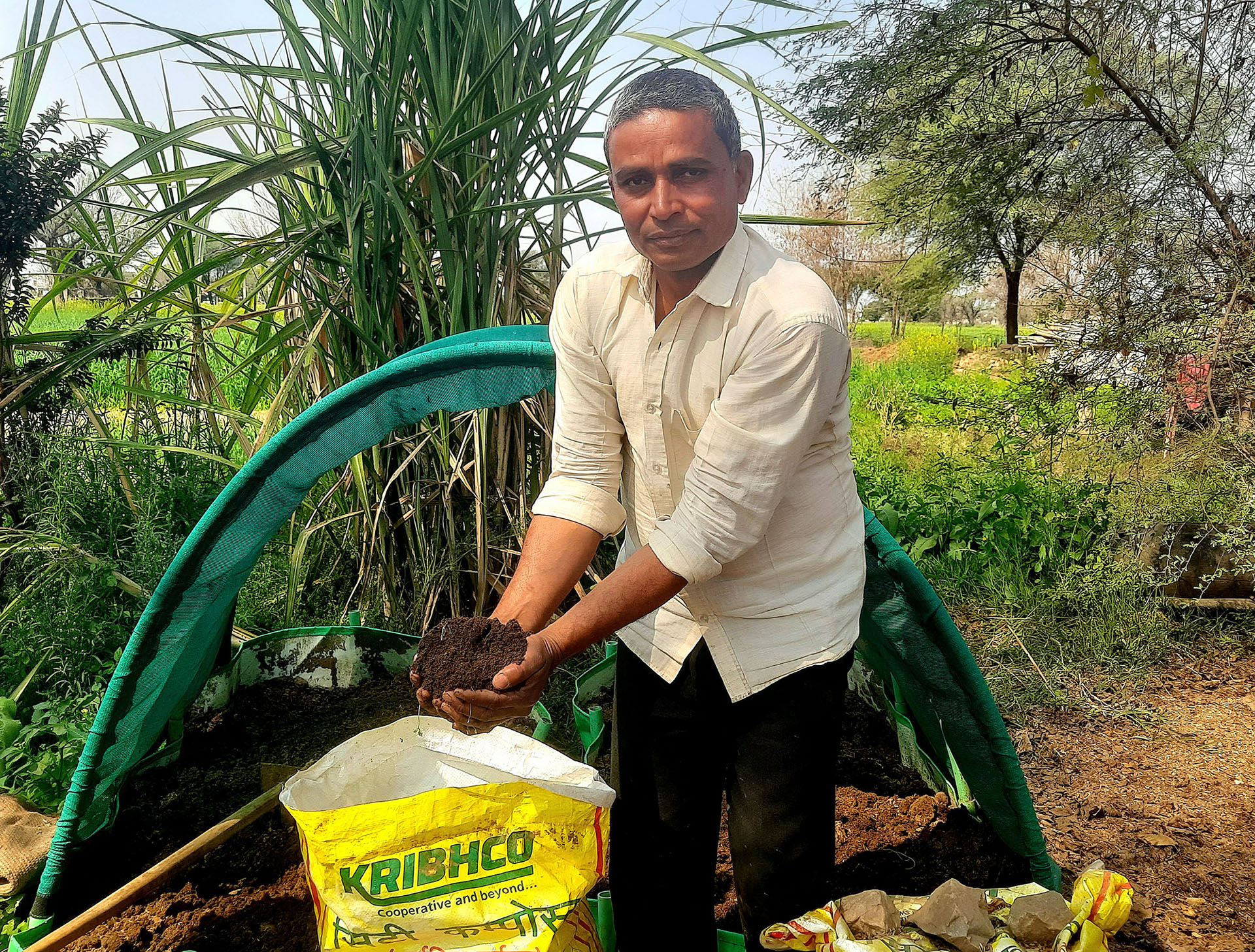
Murarilal Sharma showcasing vermicompost produced on his farm (Photo: ACCESS)
The additional income from compost and related products has opened up new possibilities, including scaling his efforts into a small enterprise. “With vermicompost, my soil has become richer and my crops healthier. I am spending less on inputs and also earning from what I produce”, says Muralilal.
Beyond Awareness: Building Community Resilience
What distinguishes this initiative is its emphasis on collective learning and sustained behavioural change. By embedding knowledge within community institutions such as these water user groups, the programme ensures that learning continues beyond individual interventions.
Women have emerged as central participants in this transformation, actively engaging in water governance and agricultural decision-making. Their involvement not only strengthens outcomes but also reshapes traditional roles within rural communities.
” Water and soil are the backbone of farming communities. Our experience with HUF has shown that when resources are managed collectively at the community level, and when that effort is backed by the right technical guidance, mentorship, and handholding, communities can manage those resources remarkably well. Water User Associations reminds of the Joint Forest Management movement in India, which began in 1990 and showed how shared stewardship can help protect and sustain natural resources over time”, says Aleen Mukherjee, Senior Vice President, ACCESS Development Services.
The programme also addresses practical challenges, such as access to agri- inputs, cost barriers, and pest management ensuring that behavioural change is supported by enabling systems.
A Path Forward
As India navigates its water and soil crisis, the experience from Rajasthan offers a powerful lesson, solutions must go beyond infrastructure to build understanding, ownership, and collective responsibility.
The shift from water stress to water wisdom is not driven by technology alone, but by people, by farmers who are learning, adapting, and leading change within their communities.
Saroj Swami’s words capture this transformation most simply yet powerfully, “The Jaldhara Project has changed my life. I learned that with proper guidance and scientific practices, even small farmers like me can earn well and conserve water.”
On this Earth Day, her story and many others like hers remind us that sustainable futures are built through empowered communities making informed choices.